
01733 639045
Premium Quality with Price Match Guarantee
Premium Quality with Price Match Guarantee

Choosing shutters is an exciting part of updating your windows, but the range of styles can make the decision feel more complicated than expected. Two popular options are tier on tier plantation shutters and bi-fold shutters for windows.
Both offer a premium finish, excellent light control and a smart, made-to-measure appearance. However, they are designed for slightly different needs.
In simple terms, tier on tier shutters are ideal when you want independent control over the top and bottom of your window. Bi-fold shutters are often the better choice when you want the panels to fold completely away and clear a wide opening.
Here is how the two styles compare, and how to decide which is right for your home.
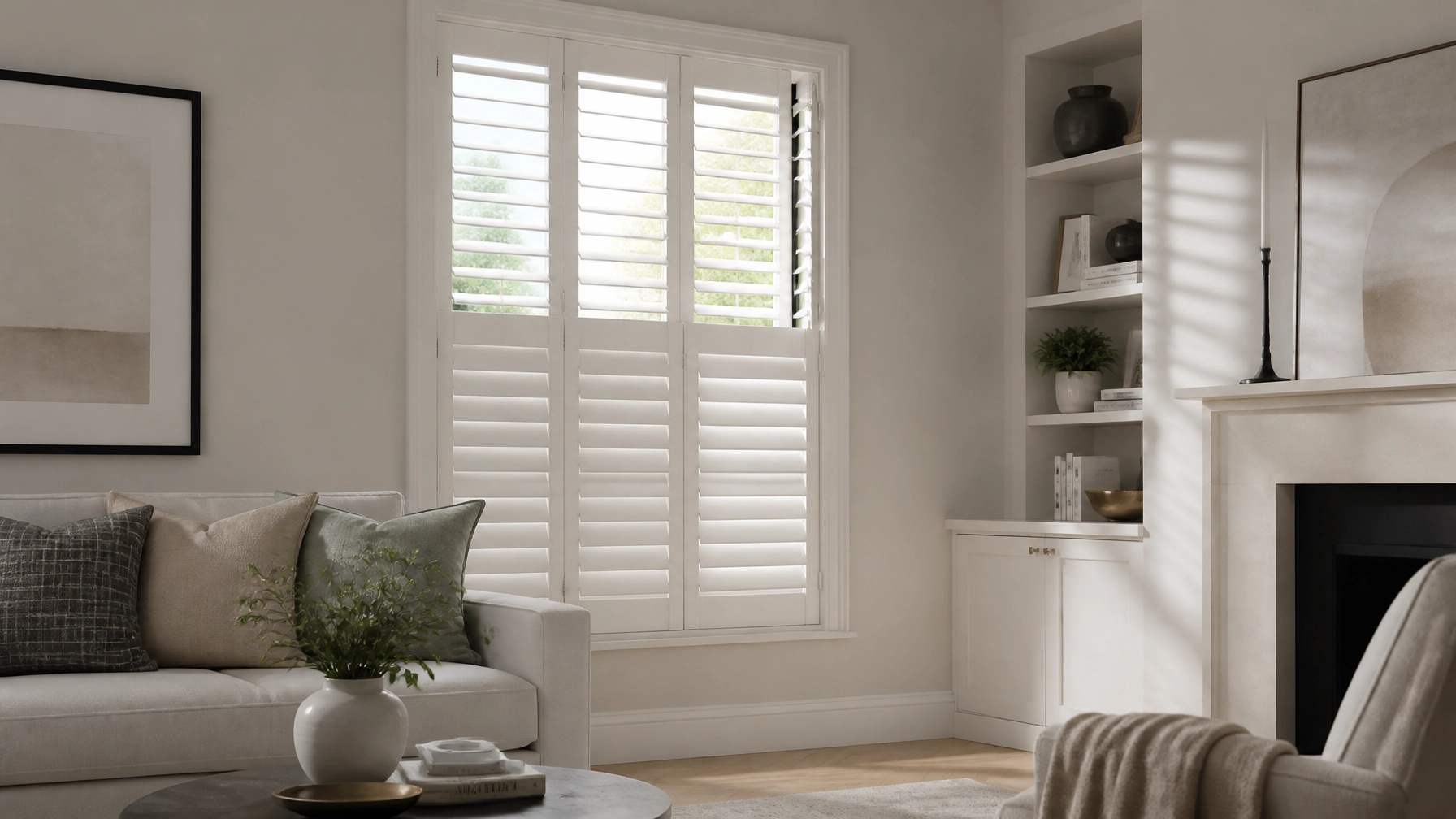
Tier on tier shutters cover the full height of your window, but the panels are split horizontally into two sections.
The top and bottom sections can be operated independently. You might close the lower panels for privacy while opening the upper panels to let in more daylight. Alternatively, you can adjust both sections to create the right balance of light and privacy throughout the day.
This makes tier on tier shutters a particularly flexible option for:
When both sections are closed, tier on tier shutters have the elegant appearance of full-height shutters. When only the lower section is closed, they can create a similar effect to café-style shutters.
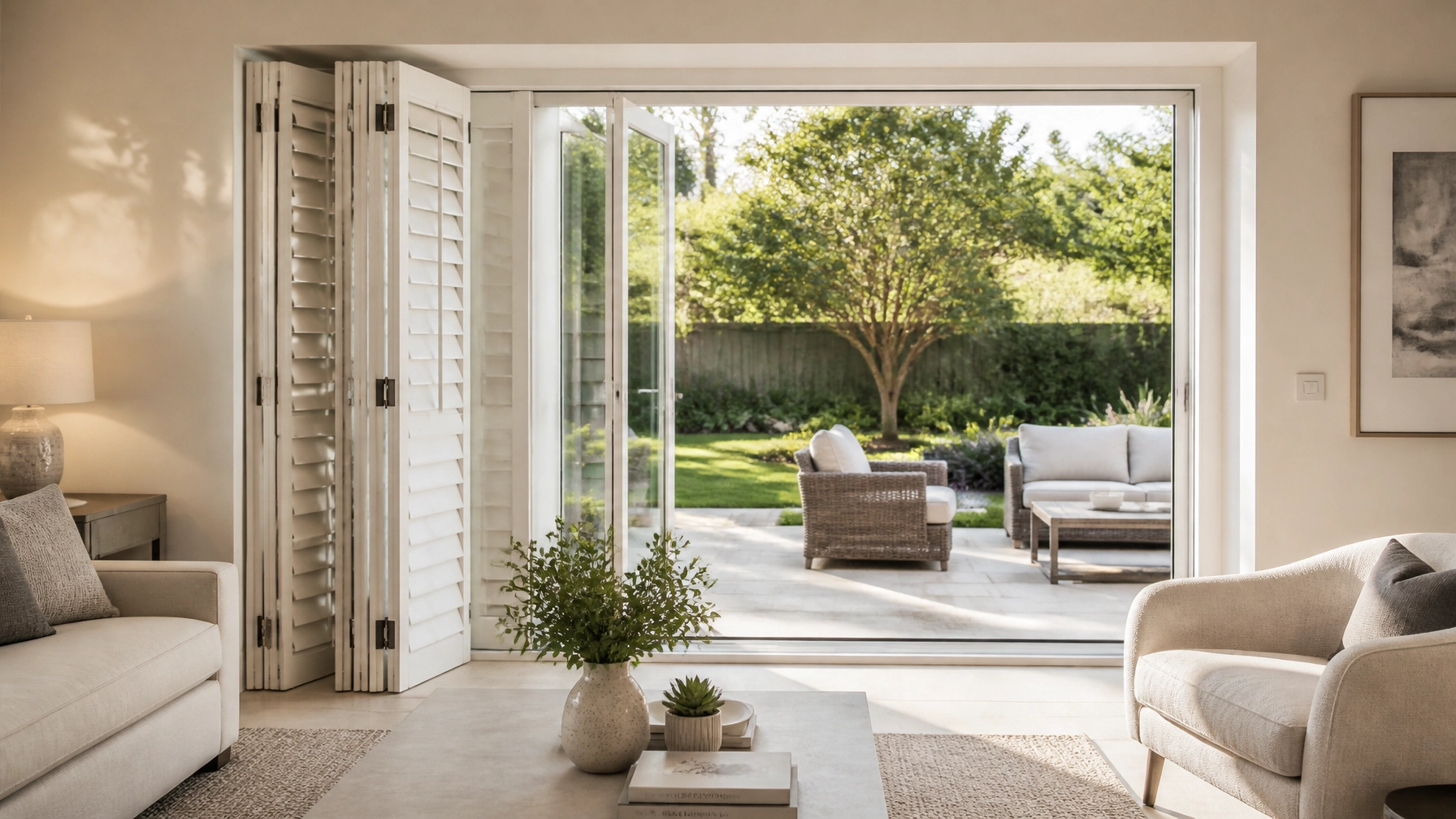
Bi-fold shutters are made from panels that are hinged together. Instead of simply opening across the window, the panels fold back neatly against the wall or adjoining space.
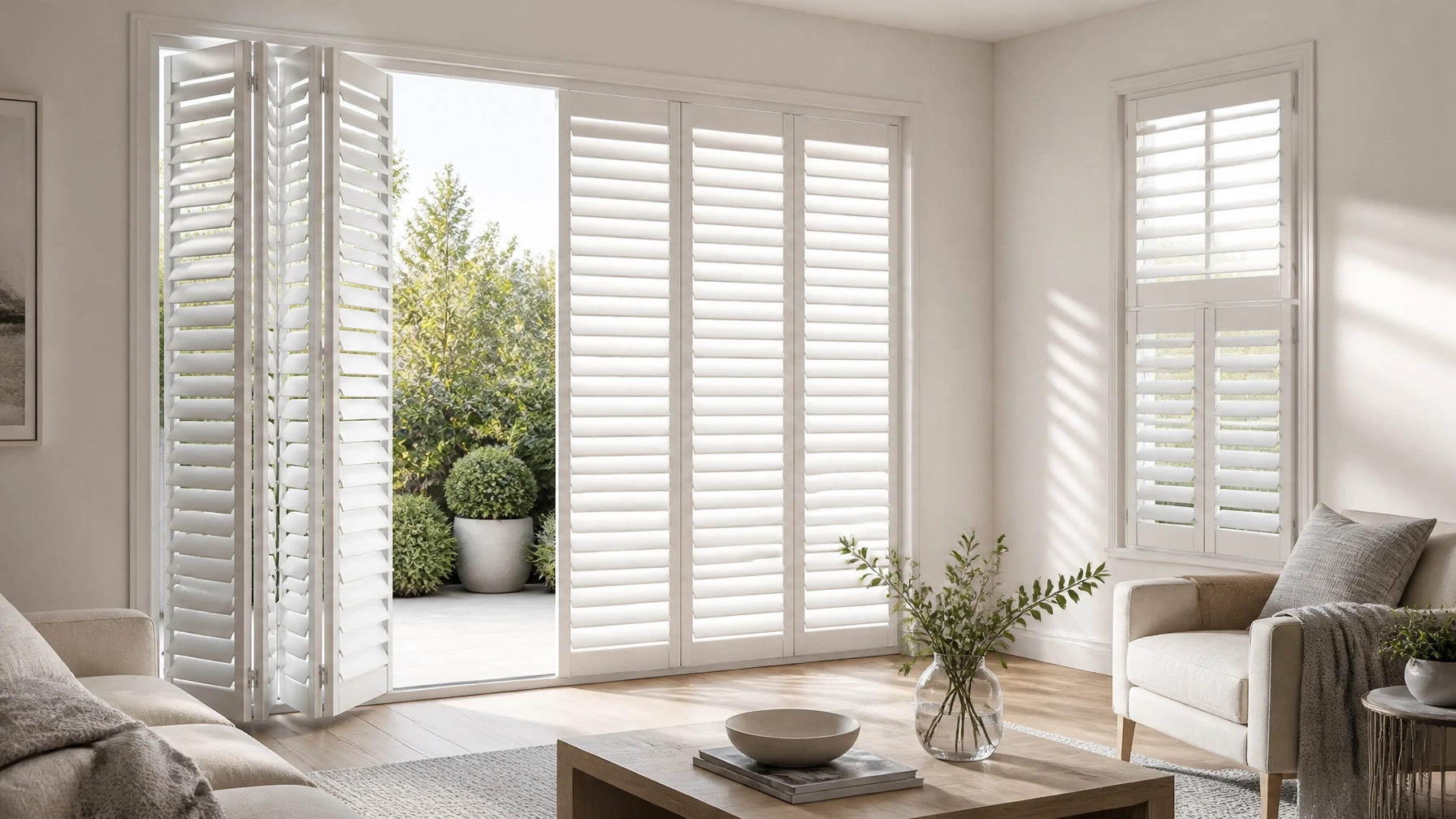
This makes bi folding window shutters especially useful for larger windows, patio doors and wide glazed openings. They can be closed when you want privacy and light control, then folded back when you want a more open view or easier access.
Our bi-fold shutters offer a versatile way to dress larger windows and doors. They can bring a distinctive, contemporary feel to a room while remaining practical for everyday use.
| Feature | Tier on tier shutters | Bi-fold shutters |
|---|---|---|
| Main design | Full-height shutters split into separate top and bottom sections | Shutter panels hinged together to fold back |
| Best suited to | Standard, tall, sash and bay windows | Wide windows, patio doors and large openings |
| Privacy control | Excellent, with the top and bottom operated independently | Very good when closed |
| Light control | Highly flexible across each section | Adjustable with the louvres, or fully open when folded back |
| Opening style | Top, bottom or both sections can be opened | Panels fold and stack to the side |
| Visual character | Classic, balanced and detailed | Flexible, practical and contemporary |
| Main benefit | Fine control over light and privacy | The ability to clear the opening |
| Space to consider | The panels remain over the glass when closed | Folded panels need room at the side |
The main advantage of tier on tier plantation shutters is the control they give you.
For example, imagine a front sitting room that faces the road. You may want daylight to enter through the upper part of the window, while keeping the lower section closed to prevent people looking into the room. Tier on tier shutters make this simple.
They are also helpful in bedrooms and bathrooms, where privacy can be important at different times of day. You can keep the lower panels closed while adjusting the upper louvres to let in a soft amount of light.
This independent operation can make your windows feel more adaptable. You are not limited to opening or closing one large shutter panel. Instead, you can make small adjustments depending on the position of the sun, the time of day and how you are using the room.
Tier on tier shutters can also work beautifully in period properties. The horizontal division often complements tall windows and traditional proportions, while the clean lines still suit modern interiors.
If your priority is to fold the shutters away completely, bi-fold shutters may be the better option.
When closed, they provide the same refined appearance and louvre control you would expect from plantation shutters. When open, the panels fold back towards the wall. This can help create a clearer view and make wide doors or openings feel less enclosed.
Interior bi-fold shutters are often considered for:
They can be particularly useful in a kitchen or dining area where you want the option of opening up the full glazed area during warmer months or when entertaining.
The key point is that bi-fold shutters are designed around the movement of the whole opening. Tier on tier shutters are designed around flexible control across the height of the window.
Both styles allow you to adjust the louvres, so both provide excellent control over daylight.
However, tier on tier shutters offer more separation. You can adjust the upper and lower sections independently, which is useful when you want privacy at eye level but still want sunlight above.
Bi-fold shutters also give you two useful options. You can keep the panels closed and adjust the louvres, or fold the panels away for a more open view.
So, if you regularly make fine adjustments to privacy and daylight, tier on tier may be the more suitable choice. If you want the option of fully opening the window area, bi-fold shutters have the advantage.
For everyday privacy, tier on tier shutters are difficult to beat.
Keeping the lower tier closed can screen the room from passers-by, while the upper tier remains open. This is particularly useful for ground-floor windows and homes close to pavements or roads.
Bi-fold shutters also provide strong privacy when closed. However, once they are folded back, the glass is exposed. That may be exactly what you want for a garden-facing opening, but it is worth considering if the window faces a neighbouring property or public area.
Think about how you want the room to feel during the day. If you prefer privacy without losing natural light, tier on tier shutters may give you greater day-to-day flexibility.
The proportions of your windows are an important part of the decision.
Tier on tier shutters can suit tall, narrow windows particularly well. The split between the two sections creates a balanced appearance and makes a full-height window easier to manage.
Bi-fold shutters can be a practical choice for wider windows and doors. Folding several panels together can make a large expanse of glass easier to open without requiring one broad panel to swing into the room.
Bay windows and unusually shaped openings need careful planning. Shutters can be made to measure for a wide range of window shapes, but the frame, panel layout and opening direction need to work with the architecture of your room.
This is why professional measuring is so valuable. A shutter style may look ideal in a photograph but require a different configuration once the window recess, handles, furniture and access around the opening are considered.
The final price depends on several factors, including the size and number of windows, the material, the finish, the louvre size and the hardware required.
On our website, the tier on tier shutter page shows prices from £250, while the bi-fold shutter page shows prices from £270. These are starting prices rather than a quote for a particular installation, so the cost of your project will depend on your individual windows.
Both options are made to order, and both involve additional design considerations compared with a simple standard panel. A free technical survey is the best way to receive accurate advice and a competitive quotation.
Ask yourself these four questions:
Do you want to keep the lower part of the window closed while letting in light above?
Tier on tier shutters could be the right choice.
Do you need the shutters to fold completely away?
Consider bi-fold shutters.
Are you dressing a tall, standard or sash window?
Tier on tier shutters are often a natural fit.
Are you covering patio doors or a wide glazed opening?
Bi-fold shutters may offer the most practical operation.
There is no universal winner. The better style is the one that suits the way you use your room and the way your windows open.
At Stilton Shutters, we provide a complete made-to-measure service. We begin with a free and safe technical survey, bringing samples so you can compare colours, materials and finishes in your own home.
We will talk through the advantages of each option, consider the shape and position of your windows, and provide a competitive quotation. There is no obligation to buy and no hard sell.
Once you approve the design, your shutters are manufactured to suit your windows and professionally fitted by our experienced installation team. You can also explore our wider shutter collection to compare other styles, including full-height, café-style and special-shape shutters.
If you are still deciding between tier on tier and bi-fold shutters, book a free consultation. We will help you find a premium, practical solution that feels right for your home.
Please fill in the form below and we will be in touch to answer any questions you have. We promise we will never pressure you into buying.
Trusted by our customers


